
What is a Thai massage?
What is a Thai massage?

What is Thai massage therapy?
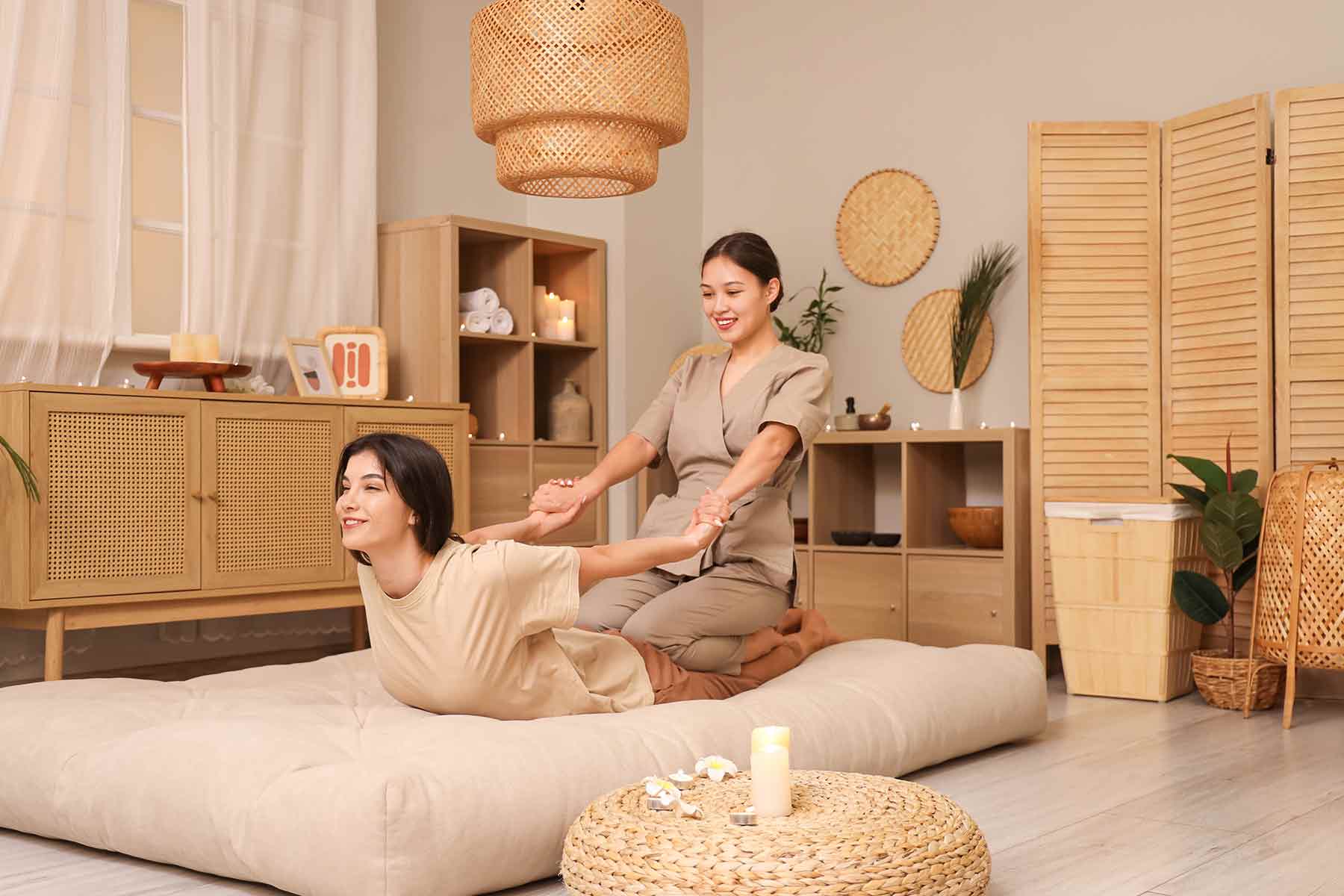
Thai massage, sometimes called Thai yoga massage in Western contexts, combines acupressure, assisted yoga-like stretches, and rhythmic compression. Unlike most table-based massages, it usually takes place on a padded floor mat, and clients remain fully clothed in loose, comfortable clothing.
The therapist uses their hands, thumbs, forearms, elbows, knees, or even feet to guide your body through movements and apply pressure. The result feels like a mix of massage, stretching, and meditative rest. You don't have to do any work; the therapist moves you through the poses while you relax.

Thai massage history & cultural significance
The roots of traditional Thai massage are complex. Its heritage combines influences from ancient Indian Ayurvedic medicine, Buddhist practice, and traditional Chinese approaches. The earliest documentation of Thai massage dates to the 15th century in Thailand, though folk traditions likely existed earlier.
Within Thai healing philosophy, practitioners work along "sen" lines (invisible energy pathways), incorporating Buddhist principles like "metta," or loving-kindness, especially in traditional settings. In 2019, UNESCO recognized "Nuad Thai, traditional Thai massage" as part of the Intangible Cultural Heritage of Humanity, underscoring its cultural importance.
How Thai massage differs from other massage types
A traditional Thai massage session feels quite different from a typical spa massage:
Location: You lie on a padded floor mat, not a massage table.
Clothing: You remain fully clothed in loose attire provided by the spa or your own comfortable clothing.
Technique: No oils are used in traditional sessions. Instead, therapists use pressure, stretching, rocking, and broad body contact (hands, forearms, feet) to create sustained effects.
Experience: The session resembles "passive yoga." The therapist moves you through various positions, guiding you into stretches that would be difficult to achieve on your own.
This assisted approach makes Thai massage accessible to people of all fitness levels and ages. It can increase mobility, circulation, and relaxation, though some modifications may be needed for people with medical conditions.
Swedish vs. Thai massage
In most places, Thai massage therapy costs a bit more than a standard Swedish massage session due to the specialized training required. Both styles aim to support relaxation and well-being, but they feel very different. The comparison table below offers a quick comparison to help you choose the right treatment for your goals.
| Massage element | Traditional Thai massage | Swedish massage |
|---|---|---|
| Average cost (60 minutes) | $90 – $170 | $60 – $150 |
| Location | Floor mat | Massage table |
| Clothing | Fully clothed in loose attire | Undressed with sheet covering |
| Technique | Acupressure; stretching; compression | Oil-based kneading and gliding strokes |
| Best for | Flexibility; energy; mobility | General relaxation; stress relief |
Thai massage benefits for body and mind
The therapeutic advantages of Thai massage extend far beyond simple relaxation. Research supports multiple physical and mental health improvements from regular sessions.
Increased flexibility and range of motion
Thai massage enhances flexibility by improving blood flow and oxygen supply to your muscles. The assisted stretches target stiff muscles and work to increase mobility in your joints. When your flexibility improves, everyday movements become easier, and your risk of injury decreases during physical activities.
Pain relief and tension reduction
Some studies show that Thai massage effectively reduces upper and lower back pain through yoga-derived poses and stretches performed while your body is loose and relaxed. The technique proves particularly helpful for headaches caused by tight neck muscles, with benefits lasting well after your session.
Stress reduction and mental clarity
Research also demonstrates that Thai massage significantly reduces stress markers in your body, proving more effective for stress reduction than simple rest. The rhythmic movements and gentle pressure calm your nervous system, promoting deep relaxation. Many people find themselves so relaxed during sessions that they drift off to sleep.
Enhanced energy and circulation
Thai massage often increases physical energy and mental alertness. The compression techniques and stretches stimulate blood circulation throughout your body, which can help reduce chronic pain and stiffness. Better circulation also supports your body's natural healing processes.
Many people find that booking sessions every 4 to 6 weeks helps maintain flexibility and manage stress effectively.
Thai herbal massage: adding healing heat
One popular variation is the Thai herbal compress massage, which uses heated bundles of herbs called luk pra kob. The compresses are typically filled with medicinal herbs like lemongrass, turmeric, ginger, kaffir lime, and camphor, wrapped in cotton and steamed until warm and aromatic.
The therapist applies the compresses with gentle pressing and rolling movements, combining heat and herbal aromas to help reduce pain, inflammation, and fatigue. Traditionally, this technique has been passed down for generations, and many Thai sources describe it as part of folk medicine for fatigue, stiffness, and post-activity recovery.
What to expect during a Thai massage session
Your Thai massage experience begins with a brief consultation. Your therapist will ask about any sore areas, injuries, or specific goals so they can tailor the session to your needs. Come prepared to share relevant health information including medications, recent surgeries, chronic conditions, or mobility limitations.
Sessions often last 60 to 120 minutes, with 90 minutes being the most common duration. You'll lie on a thick, supportive floor mat while your therapist leads you through a sequence of assisted stretches, compression, and gentle rocking. Every movement adjusts to your comfort level; you should never feel forced into positions or experience sharp pain.
Preparing for your first Thai massage
First-time clients often wonder how to prepare for this unique massage experience. To get the most out of your session:
Arrive wearing or bringing comfortable, stretchy clothing that won't restrict your movement.
Drink plenty of water beforehand to ensure you're well-hydrated.
Eat a light snack 1 to 2 hours before your appointment to keep your energy steady without feeling too full.
Skip strong perfumes or heavy jewelry that might interfere with the massage and stretching movements.
Communicate openly with your therapist about pressure levels and any discomfort during the session. Thai massage should feel therapeutic, sometimes intense, but never painful.
After your massage, avoid intense workouts for 12 to 24 hours; gentle walking and stretching are ideal post-session.
Who should avoid Thai massage?
Thai massage is generally safe for healthy adults, but it isn't for everyone. It may not be appropriate for people with:
High-risk pregnancy
Recent surgery
Uncontrolled hypertension
Serious spinal or joint conditions
Bleeding disorders
Active cancer
If you're pregnant, only see a therapist trained in prenatal massage, and get clearance from your healthcare provider first. Special care is taken to avoid abdominal and foot pressure in pregnancy.
Finding a qualified Thai massage therapist
Only a small percentage of massage therapists can properly perform Thai massage, so finding someone with proper training is essential. Follow these guidelines to locate a qualified Thai massage therapist near you:
Look for practitioners who have completed dedicated training in traditional Thai massage techniques.
Read reviews from previous clients on platforms like Thervo and Google to assess both quality and hygiene standards.
Ask about the therapist's specific training, experience with your health conditions, and whether they can customize the session to focus on your particular needs.
Consider starting with a shorter 60-minute session for your first experience to see how your body responds before committing to longer treatments.
A qualified therapist will ask detailed questions about your health history and adjust techniques accordingly.
Using our proprietary cost database, in-depth research, and collaboration with industry experts, we deliver accurate, up-to-date pricing and insights you can trust, every time.