
How much does waxing cost?
How much does waxing cost?
$10 – $50 facial or underarm waxing cost
$60 – $100 full leg wax cost

Waxing prices
Waxing prices range from as little as $10 to as much as $300+ depending on the treatment area, your location, the salon type and reputation, and the wax type used. A full body wax costs $150 to $300+, while waxing a small facial area like the chin or upper lip averages $10 to $20. Initial sessions typically cost more than quick touch-ups.
| Service type | Average cost |
|---|---|
| Bikini line | $30 – $50 |
| Brazilian | $50 – $100+ |
| Full body | $150 – $300+ |
| Face | $10 – $50 |
| Hand | $10 – $25 |
| Underarm | $15 – $30 |
| Stomach | $30 – $50 |
| Shoulders | $35 – $60 |
| Chest | $40 – $70 |
| Back | $50 – $80 |
| Half leg | $35 – $60 |
| Full leg | $60 – $100 |
Remember to budget a little extra for gratuity. Tipping is customary in the beauty service industry, with most people tipping 15% to 20% of the total cost.
Leg waxing
The cost of leg waxing depends on whether you choose half-leg or full-leg treatment. Half-leg waxing (lower legs only) costs $35 to $60, while full leg waxing costs $50 to $100. Full legs include thighs and lower legs, making it a more time-intensive service that removes significantly more hair.
Chest and back wax
A chest and back wax costs $30 to $80 per area, with many salons offering discounted combo pricing when you book both together. These larger areas require more time and product, which factors into the pricing. Some salons have tiered pricing based on how much of the area you want waxed.
Underarm waxing
Underarm waxing costs $15 to $30 per session on average. This quick service takes just 10 to 15 minutes and provides results lasting 3 to 4 weeks. The underarm area is relatively small, making it an excellent starting point if you're new to waxing.
Facial waxing
Facial waxing includes services for the eyebrows, upper lip, chin, sideburns, and full face. Full facial waxing ranges from $30 to $50 and addresses multiple areas in one session for a complete smooth finish.
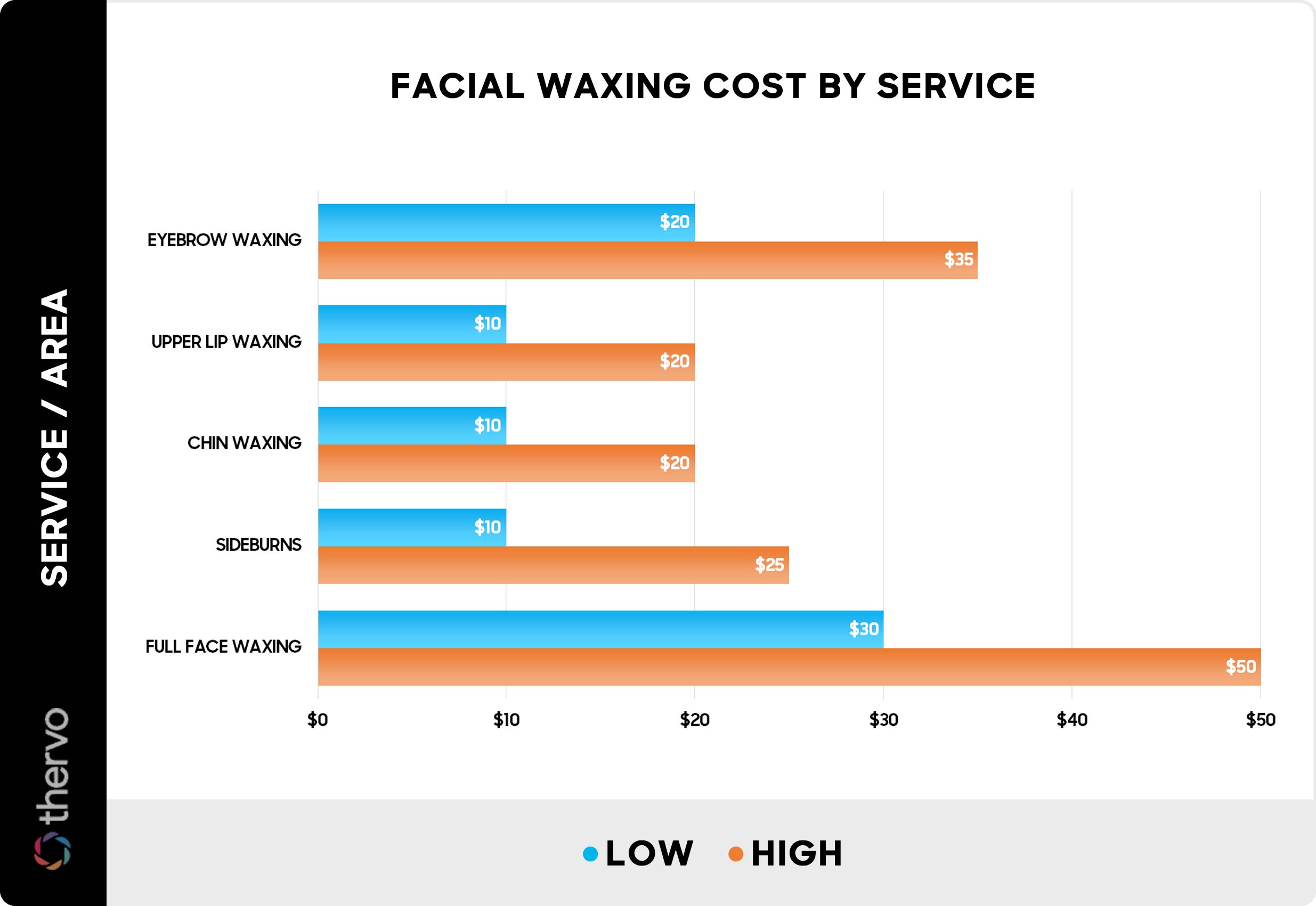
| Service / area | Average cost |
|---|---|
| Eyebrow waxing | $20 – $35 |
| Upper lip waxing | $10 – $20 |
| Chin waxing | $10 – $20 |
| Sideburns | $10 – $25 |
| Full face waxing | $30 – $50 |
Bikini area waxing
Bikini waxing removes the hair around the bikini line and comes in several styles.
A basic bikini wax costs $30 to $50 and removes the hair along the sides and top of panty line.
A French bikini wax costs $45 to $75 and removes almost all the hair from the front and sides, leaving a small strip or triangle.
Brazilian waxing costs $50 to $100+ and is more extensive, removing most or all pubic hair.
Full body wax
A full body wax costs $150 to $300 or more, depending on the salon and whether you're including facial areas. This comprehensive service covers legs, arms, underarms, bikini area, and torso. Many salons offer package deals that can reduce the overall price when you commit to multiple sessions.
What factors influence body wax prices?
Several factors determine how much you'll pay for waxing services:
Treatment area: The size and sensitivity of the treatment area significantly impact pricing. Larger areas like full legs or back require more time, product, and effort, resulting in higher costs. Sensitive areas like Brazilian or facial waxing may cost more due to the precision and care required for these delicate zones.
Pricing structure: Some salons charge differently based on hair density, time required, or client gender, though many modern establishments are moving toward gender-neutral pricing.
Wax type: Hard wax is gentler on sensitive skin and doesn't require strips, often costing slightly more than soft wax. Premium waxes with soothing ingredients like chamomile or lavender may add a few dollars to your service but can reduce irritation.
Esthetician expertise: Experienced, licensed specialists charge more but deliver less discomfort, better results, and lower risk of irritation. Paying a bit more for a skilled professional often proves worthwhile, especially for sensitive areas.
Salon type & reputation: High-end spas and specialty studios charge more than chains or small salons, often including perks like aromatherapy, luxury skincare products, and upscale atmosphere. However, reputation matters more than price alone, and great service exists at every price point.
Skin preparation: Some salons include pre-wax treatments and post-wax soothing products in their base price, while others charge separately for premium prep services. Pre-wax cleansing, exfoliation treatments, and specialized numbing creams add to the overall cost but can enhance your results and comfort level.
Geographic location: Salons in urban and coastal areas typically charge more, while rural and small-town salons offer the same quality at more budget-friendly rates.
Discounts
Many salons offer package deals, membership programs, or first-time client discounts that significantly reduce per-session costs.
Buying a series of treatments upfront can save you 10% to 30% compared to individual appointments.
Monthly memberships often include perks like priority booking, complimentary touch-ups, and discounted retail products.
Many salons offer discounts when you book multiple areas together, such as legs and bikini or back and chest.
Sugaring vs. waxing
Sugaring is an alternative hair removal method that uses a paste made from sugar, water, and lemon juice. This all-natural option costs about the same as traditional waxing, ranging from $15 to $80+ depending on the area. The paste adheres only to hair (not skin), making it gentler and potentially less painful for sensitive skin types.
Many people find sugaring causes less irritation and fewer ingrown hairs compared to traditional wax. The sugar paste is applied at room temperature, eliminating the burn risk associated with hot wax. However, availability may be limited in some areas, and not all hair types respond equally well to this method.
What to expect at your waxing session
Your first waxing appointment typically begins with a brief consultation where your esthetician assesses your skin and hair type. They'll explain the process, ask about allergies or skin sensitivities, and answer any questions. The actual waxing takes anywhere from 15 minutes for small areas to over an hour for full-body services.
During the service, warm wax is applied in the direction of hair growth, then quickly removed against the growth direction using cloth strips or by peeling the hardened wax. You'll experience some discomfort, especially during your first few sessions, but most people find it becomes more tolerable over time.
Your esthetician will soothe the skin afterward with cooling gel or lotion to reduce redness.
Pre-wax and post-wax care
Proper preparation and aftercare significantly impact your waxing results and can prevent common issues like irritation, redness, or ingrown hairs.
Before your appointment:
Gently exfoliate the treatment area 24 to 48 hours prior to remove dead skin cells and allow for cleaner hair removal.
Avoid sun exposure, tanning beds, and retinol products for at least 48 hours beforehand, as these can make skin more sensitive.
Arrive with clean, dry skin free of lotions, oils, or deodorant (for underarm waxing).
After waxing:
Avoid hot showers, saunas, swimming pools, and intense exercise for 24 to 48 hours, as heat and sweat can irritate freshly waxed skin.
Keep the area moisturized with fragrance-free lotion.
Wear loose, breathable clothing to prevent friction.
Begin gentle exfoliation 2 to 3 days post-wax to prevent ingrown hairs.
Avoid sun exposure to prevent hyperpigmentation on sensitive, newly waxed skin.
Waxing FAQs
How long does waxing last?
Waxing results typically last 3 to 6 weeks, depending on your hair growth cycle and the area treated. Most people notice smoother skin for 3 to 4 weeks before significant regrowth appears. With regular waxing every 4 to 6 weeks, you may find the hair grows back finer and sparser over time, extending the smooth period between appointments.
How long does hair have to be to wax?
Hair needs to be at least 1/4 inch long (about the length of a grain of rice or a sprinkle) for the wax to grip effectively. This typically means 2 to 3 weeks of growth after shaving. If hair is too short, the wax won't adhere properly, resulting in patchy removal. If it's too long, your esthetician can trim it before waxing.
Is waxing better than shaving?
Waxing offers several advantages over shaving, including longer-lasting results and slower regrowth. Since waxing removes hair from the root, you'll enjoy smooth skin for weeks rather than days. Over time, regular waxing can lead to finer, less noticeable regrowth.
However, waxing is more expensive up front and requires letting hair grow between sessions, unlike the daily convenience of shaving.
Does waxing reduce hair growth?
Regular waxing can weaken hair follicles over time, leading to finer and sparser regrowth. Many long-term waxing clients notice that hair grows back more slowly and thinner after months or years of consistent treatments. However, waxing doesn't permanently stop hair growth. Individual results vary based on genetics, hormones, and the treatment area.
Does numbing cream work for waxing?
Over-the-counter numbing creams containing lidocaine can reduce waxing discomfort when applied 30 to 45 minutes before your session. However, effectiveness varies by individual, and some people experience only minimal pain reduction.
Does waxing cause ingrown hairs?
Waxing can sometimes lead to ingrown hairs, especially if you're prone to them. When hair grows back after waxing, it may curl under the skin rather than breaking through the surface. Regular exfoliation 2 to 3 times per week and keeping skin moisturized helps prevent ingrown hairs. Your esthetician can recommend specific products designed to reduce this common issue.
Does waxing hurt?
Waxing causes some discomfort, as hair is being removed from the root. The pain level varies by person and treatment area. Sensitive zones like the bikini area or face may feel more intense than arms or legs. Most people describe it as a quick, sharp sting that fades within seconds. The discomfort usually decreases with regular waxing as you get used to the sensation and hair grows back finer.
How to find the best waxing service near you
When searching for a local salon or spa near you for waxing services, be sure to:
Look for licensed estheticians who have formal training in the service you're booking.
Read reviews on platforms like Thervo.com, Fash.com, and Google. Look for consistent praise about cleanliness, professionalism, and technique.
Visit the salon beforehand to observe their cleanliness and ask questions about their practices.
Check that the salon maintains strict hygiene standards. Technicians should never double-dip applicators into wax and should use fresh supplies for each client.
Questions to ask a waxing professional
Before confirming your appointment, ask these important questions to ensure you're choosing a qualified professional who meets your needs:
What type of wax do you use, and is it suitable for sensitive skin?
How long have you been doing waxing services professionally?
Are you licensed and certified by the state?
What sanitation practices do you follow between clients?
Do you offer a consultation to discuss my skin concerns or allergies?
What pre- and post-wax care products do you recommend?
What's your cancellation policy, and do you offer package deals or memberships?
How should I prepare for my appointment to ensure the best results?
Using our proprietary cost database, in-depth research, and collaboration with industry experts, we deliver accurate, up-to-date pricing and insights you can trust, every time.