
How much does a vampire facial cost?
How much does a vampire facial cost?
$500 – $1,500 average cost per session
$1,500 – $4,500 average cost for 3-session package

Average vampire facial cost
A vampire facial costs $500 to $1,500 per session on average, depending on the provider and your location. Dermatologists recommend getting at least three monthly treatments for the best results, for a total cost of $1,500 to $4,500. Some providers offer discounts if you purchase a package of three or six sessions at one time.
| Number of sessions | Average cost |
|---|---|
| One session | $500 – $1,500 |
| Three-session package | $1,500 – $4,500 |
| Six-session package | $3,000 – $9,000 |
What is a vampire facial?
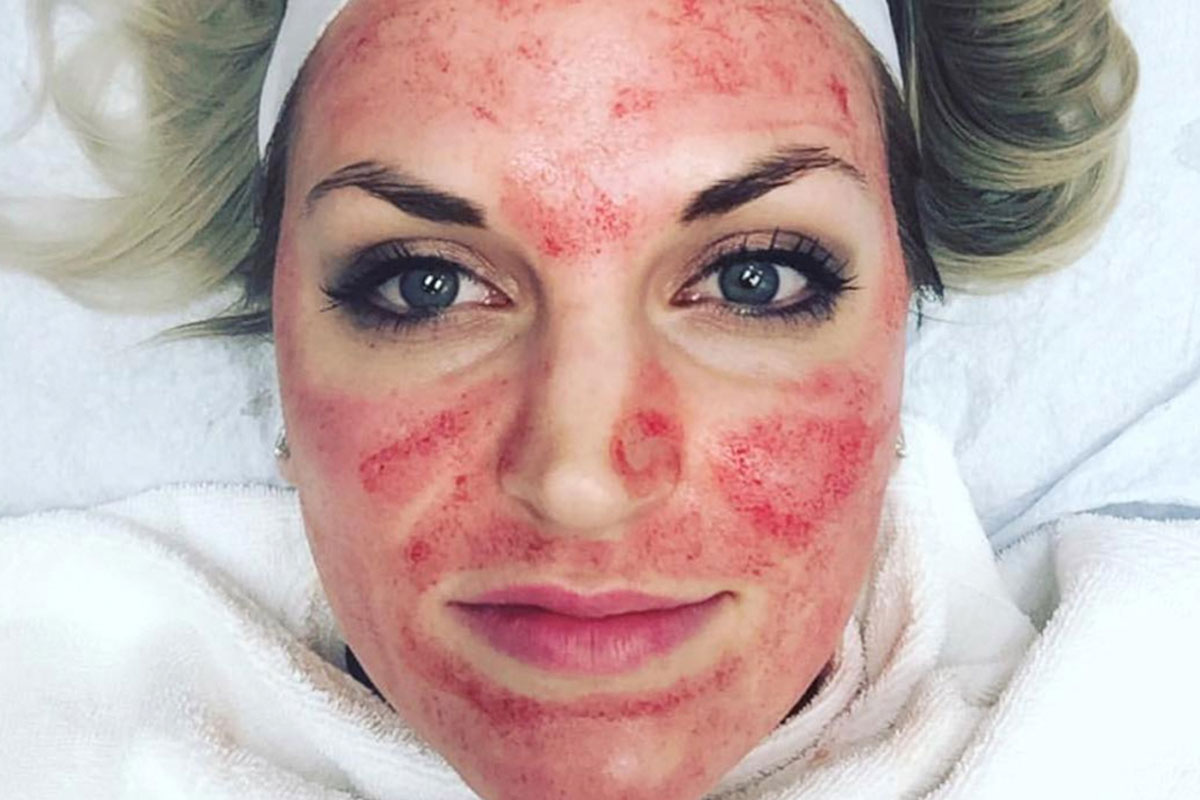
A vampire facial is a skincare treatment that uses your own blood to help refresh your skin. During the procedure, a provider draws a small amount of your blood, separates the platelet-rich plasma (PRP), and applies it to your face with microneedling to boost absorption.
The procedure earned its nickname because it uses your own blood to promote collagen production and cell regeneration. Despite the dramatic name, this cosmetic treatment has gained popularity for its natural approach to improving skin texture, tone, and overall radiance with little downtime.
What happens during a vampire facial?
The vampire facial procedure typically takes about 60 to 90 minutes from start to finish and involves this process:
Blood draw: Your provider draws a small amount of blood from your arm, similar to a routine blood test.
PRP preparation: The provider places the blood in a centrifuge machine that spins rapidly to separate the platelet-rich plasma from other blood components.
Numbing: A topical numbing cream is applied to your face to minimize discomfort during the microneedling process.
Microneedling: Your provider uses a device with tiny needles to create micro-injuries in your skin, triggering your body's natural healing response.
PRP application: The concentrated platelet-rich plasma is applied to your face, where it penetrates through the micro-channels created by the needles.
Recovery: After the treatment, you may experience redness and mild swelling for a few days.
A vampire facial is sometimes called PRP microneedling.
Vampire facial benefits
Vampire facials offer a range of skin improvements that develop gradually over several weeks as your skin produces new collagen. This treatment works with your body's natural healing processes rather than against them.
Vampire facial treatments provide several benefits:
Reduces fine lines and wrinkles: Stimulates collagen production to smooth aging signs
Improves skin texture: Creates a smoother, more refined skin surface
Minimizes acne scars: Helps fade post-acne scarring and other textural irregularities
Evens skin tone: Reduces hyperpigmentation and sun damage
Tightens skin: Promotes firmer, more youthful-looking skin
Shrinks pore size: Makes enlarged pores appear smaller
Enhances radiance: Gives skin a healthy, natural glow
Addresses dark circles: Can improve the appearance of under-eye darkness
Many people choose a vampire facial because it uses your own blood, minimizing the risk of allergic reactions or rejection. The results look natural since the treatment enhances your skin's existing regenerative capabilities.
What affects the cost of a vampire facial?
Several factors influence the cost of vampire facials:
Practitioner expertise: Your provider's credentials and experience can influence treatment costs significantly. Dermatologists and plastic surgeons typically charge more than a licensed medical aesthetician.
Number of sessions: Most people need multiple sessions to get the best results, which increases the overall treatment cost.
Geographic location: Where you live significantly influences prices. Costs are typically higher in major cities and areas with higher cost of living like Los Angeles, Boston, or New York City.
Add-ons: Some providers offer add-on treatments or products with your vampire facial, such as hyaluronic acid fillers, low-level light therapy, or skincare kits. While these extras can enhance your results, they may also increase the final cost.
Special offers or discounts: Many providers offer seasonal promotions, discounts on multi-session packages, and new patient specials, which reduce the overall cost.

Vampire facial vs. other treatments
Vampire facials are just one option among many skin rejuvenation treatments. Ask your provider which treatment is best for your skin concerns.
| Treatment | Average cost |
|---|---|
| Microneedling | $200 – $700 per session $600 – $4,200 total treatment |
| RF microneedling | $600 – $2,400 per session $1,800 – $7,200 total treatment |
| Chemical peel | $150 – $300 (light peel) $300 – $1,500 (medium peel) |
| Laser resurfacing | $900 – $5,000 |
Vampire facial vs. traditional microneedling: Standard microneedling without PRP costs less but may produce less dramatic results. Adding PRP amplifies the benefits of microneedling by delivering growth factors directly to your skin.
Vampire facial vs. RF microneedling: Radiofrequency (RF) microneedling uses heat energy delivered through needles to stimulate collagen, while vampire facials rely on PRP's growth factors. RF microneedling may be more effective for skin tightening and deep wrinkles, but vampire facials offer superior results for texture and tone. Some providers combine both treatments for enhanced outcomes.
Vampire facial vs. RF microneedling: Radiofrequency (RF) microneedling uses heat energy delivered through needles to stimulate collagen, while vampire facials rely on PRP's growth factors. RF microneedling may be more effective for skin tightening and deep wrinkles, but vampire facials offer superior results for texture and tone. Some providers combine both treatments for enhanced outcomes.
Vampire facial vs. chemical peels: Chemical peels work by removing the top layer of skin, while vampire facials stimulate collagen production from within. Both improve skin texture, but vampire facials may produce longer-lasting results.
Vampire facial vs. laser resurfacing: Laser treatments can provide more dramatic results for deep wrinkles and significant sun damage, but they typically involve more downtime and higher costs. Vampire facials offer a gentler approach with less recovery time.
FAQs about vampire facials
Do vampire facials work?
Vampire facials work for many people when performed correctly by qualified professionals. Clinical studies show they can stimulate collagen production and improve skin texture. However, results vary depending on your skin condition, age, and overall health. Most people notice gradual improvements over several weeks following their treatment sessions.
The key to success is getting multiple treatments as recommended by your provider. A single session may produce subtle changes, but a series of treatments typically yields more dramatic results.
How long does a vampire facial last?
The results of a vampire facial last 6 months to 2 years, depending on your age, skin condition, sun protection habits, and lifestyle factors. Younger patients with minimal skin damage and people who protect their skin from sun exposure often see longer-lasting results.
Most providers recommend maintenance treatments every 12 to 18 months to sustain your results. Some patients return for touch-up sessions more frequently to maintain optimal skin appearance.
Is a vampire facial safe?
Vampire facials are generally safe when performed by licensed, trained professionals in sterile environments. Since the treatment uses your own blood, the risk of allergic reactions is minimal. You may experience temporary side effects like redness, swelling, and minor bruising that typically resolve within a few days.
However, improper sterilization can lead to serious infections. Always choose a reputable provider who follows strict safety protocols and uses FDA-approved equipment. Serious complications are rare but can occur if the provider doesn't follow safety standards.
What is the difference between a vampire facial and a vampire facelift?
A vampire facial and vampire facelift are different procedures, though both use PRP therapy:
A vampire facial combines microneedling with PRP application to improve skin texture and tone.
A vampire facelift involves injecting PRP along with dermal fillers into specific areas of the face. This procedure aims to restore volume and create a lifting effect.
A vampire facelift is more invasive and typically costs more than a vampire facial. It addresses volume loss and deeper structural concerns, while the vampire facial focuses primarily on skin quality and surface-level improvements.
Where to get a vampire facial near you
Choosing a qualified, experienced provider is more important than finding the lowest price. Poor technique or unsanitary conditions can lead to complications that cost far more to correct. Many providers offer a free consultation so you can discuss your needs and options.
Follow these tips when searching for vampire facial providers near you:
Look for a provider with extensive experience specifically with vampire facials.
Ask to see before-and-after photos of recent clients.
Read feedback from previous clients on Thervo and Google.
Confirm the provider is licensed.
Ensure the facility follows proper sterilization procedures.
Questions to ask a vampire facial provider
Before committing to a vampire facial, ask these questions to help you gauge the provider's knowledge and experience:
How many vampire facial treatments have you performed?
How many sessions will I need, and how often should they be scheduled?
What results can I realistically expect for my specific skin concerns?
Can you provide before and after photos of patients with similar skin concerns?
Are there any risks or potential side effects specific to my skin type or condition?
What is the expected downtime?
How should I care for my skin after the treatment?
What is the total estimated cost for my recommended treatment plan?
Do you offer any package deals or financing options?
How do you ensure the sterility and safety of the equipment?
What other treatments do you recommend if a vampire facial isn't suitable for me?
Using our proprietary cost database, in-depth research, and collaboration with industry experts, we deliver accurate, up-to-date pricing and insights you can trust, every time.